Master the Grill

Help! There’s paint flaking off the inside of my barbecue! What can I do?!


Whoa.  Settle down there partner.  It's not paint.  It's the residue from the oil, grease and smoke your barbecue generates after it settles on the inside of your lid.  After awhile that stuff gets brittle and starts to wander down from the inside of the lid towards your burgers.  Some degreaser and an hour or two of scrubbing will make it go away.  At Barbecues Galore we do not sell any barbecues that have paint on the inside of the lid so, if you got your barbecue from us, it can't be paint.

What’s Better: Stainless Steel or Cast Iron Cooking Grills?


Good question.  The answer is: that depends on you.  We’ll explain:

Cast iron holds heat extremely well and a thick, cast iron cooking grill can be a real pleasure to cook on as it retains lots of heat and you’ll be cooking with the heat in the grill as well as the heat that is coming from the bottom of your barbecue.  Additionally a porcelain coating on a cast iron grill, whether shiny porcelain or dull, matte-finish porcelain, makes a cast iron grill easy to clean and reduces (not eliminates) the need to keep your grills cured.  So, if you can’t live without hearing a sharp sizzling sound when your meat hits the heat or you love strong, dark sear marks on your steaks then you should consider cast iron cooking grills.

A stainless steel cooking grill will not hold the heat as well as cast iron but will last longer.  Stainless steel is not anywhere near as heat-retentive as cast iron.  In order to retain enough heat to cause effective searing you need more mass when using stainless steel than you would with cast iron. A large diameter stainless steel grill (at least 6mm) should hold heat well enough to sear meat and will last for years and years.  Stainless steel grills turn black after the first few uses but require only a simple wipe with a grill brush to keep them free of residue.  So, if you’re looking for the long-lasting, low maintenance cooking grill then consider stainless steel.

Creating Your Outdoor Room


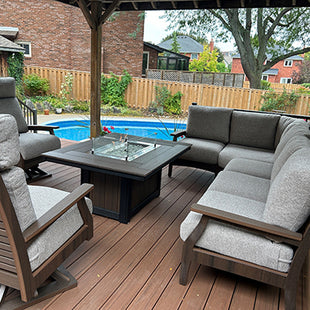
Sitting comfortably with friends or family in the backyard on a cool summer evening, with a warm fire and dinner sizzling on the grill, is pure pleasure. It is also the precise reason why people throughout North America are turning their yards and decks into inviting outdoor living spaces. People are extending the comfort and luxury of their homes into the great outdoors, and the result is the popular trend called the “outdoor room.”

POPULARITY YIELDS FULL-FEATURED PRODUCTS

As consumer interest in the outdoor room continues to grow, hearth, patio and barbecue manufacturers are developing stylish, full-featured products to enhance the comfort, convenience and pleasure of entertaining or relaxing outside, no matter the climate or season. Manufacturers now have extensive product lines that can help extend a home’s living space both literally and visually. There are barbecues and fireplaces in all sizes and styles, from simple to high-tech, and plush (or sleek) patio furniture and accessories to help set any mood.

OUTDOOR ROOM BASICS

Anyone can easily create an outdoor room. In general, the concept encompasses a grilling and eating area, pulled together with a hearth product, such as a fireplace, firepit or chiminea. Some outdoor rooms are similar to indoor kitchens, with expansive counter space and full food preparation areas complete with sinks and plumbing. It’s even possible to add a dishwasher and a refrigerator to make trips inside to clean up or grab cold drink a distant memory. Other outdoor rooms take the concept further with the addition of pizza ovens, cocktail bars, fountains, trellises, patio heaters, spas and pools.

Landscaping, lighting and sculptures are additional elements that can help create a cohesive feeling within an outdoor space.

pageseppic_outdoorroom

THE ESSENTIALS

Pulling together an outdoor room is less about the quantity of product and more about creating an outdoor living area that meets a homeowner’s idea of comfort and relaxation. Here are some simple steps to help create the perfect outdoor room:

  1. DETERMINE THE IDEAL USE OF THE OUTDOOR SPACE.
    Use a notepad to jot down ideas about how the space will be used in all of its applications, from entertaining to relaxing.
  2. CREATE A WISH LIST.
    The increase in the number of magazine and newspaper articles has created an abundance of information on outdoor rooms or outdoor living spaces. Clip or print pictures and put them into a notebook.
  3. REVIEW THE HOME’S STYLE.
    It’s important to have an understanding of a home’s architectural style when creating an outdoor room so that the outdoor spaces accentuates the home’s indoor spaces. There are products available for every taste and style.
  4. VISIT A SPECIALTY RETAILER.
    Take the notebook and wish list to a specialty retailer that sells hearth, barbecue and patio products. A specialty retailer can help determine the materials and outdoor room products available in an area and guide the final plan, as well as coordinate installation.
  5. RESEARCH THE PRODUCTS.
    After obtaining the details from a specialty retailer, go online to review products and manufacturer information.
  6. CONSIDER FIRE AND FOOD.
    These are key elements in every well-designed outdoor room. Position the fireplace as the focal point, blend in the cooking and eating areas and then consider additional features.
  7. THINK FOUNDATION.
    Stone patios, retaining walls, fences and decks are basic foundation elements.
  8. DRAW A PLAN.
    The best way to achieve the desired end result is to sketch out a plan. Don’t worry about picture-perfect drawings – it’s the general idea that counts!
  9. BUILD THE SPACE.
    Have fun putting the space together. Consider multiple conversation areas for enhanced functionality and interest.
  10. USE LANDSCAPING AS AN ACCESSORY.
    Carefully placed trees and shrubs can add important texture and appeal to an outdoor room. Select plants that change with the season, offering different colors, blooms or scents depending on the time of year.
  11. ADD THE FURNISHINGS.
    Select comfortable patio furniture that invites people to settle in for an extended period of time. Regardless of style, outdoor furnishings are available to add beauty and character, creating the atmosphere of a lush oasis. In addition to tables and chairs for the eating area, consider chaise lounges, couches and side tables.
  12. CONSIDER LIGHTING.
    To extend the amount of time spent outdoors, consider lighting for pathways, around pools, or to accentuate landscaping.
  13. DETAILS, DETAILS, DETAILS.
    After all is said and done, there is always still more that can be added.
  14. DECORATIVE DETAILS
    Details such as an attractive table or a favorite work of art can help turn a backyard patio into a stunning outdoor room.

GETTING STARTED WITH A PROFESSIONAL

A specialty retailer is a key partner in creating an outdoor room. In addition to expertise and products, a specialty retailer can offer key insights about what’s available in a particular area and what works best in a certain climate.

For a list of specialty retailers, visit www.hpba.org. Other professionals include home designers and architects.

Wood Flavouring


WOOD SIZES

  • Pellets
    Ideally suited when used in a contained smoker box so the small particles will smolder slowly.
  • Chips
    For use primarily in gas barbecues, may also be used in smokers and charcoal barbecues, although larger chunks are preferable. For gas barbecues, place smoker box on rock grate in back corner of barbecue directly above burner. If no smoker box, wrap in tinfoil and poke holes for smoke to escape.
  • Chunks
    Longer lasting chunks are ideal for Smokers and Charcoal barbecues. Soak in water and place directly on coals. Check your manual.
  • Soaking Wood
    Experiment! Soaking wood will allow it to smolder instead of burning and usually offers a more pungent flavour. Also, any smoker box starves the wood of oxygen allowing dry or wet wood to smoke more rather than burn.

APPLICATION GUIDE

  • Alder
    Alder is the sportsperson’s favourite. Fragrant and delicate, compliments all fish. Traditional choice for smoked salmon. For all game and seafood.
  • Apple
    Apple is the sweetest & mildest of all. Excellent choice for poultry or flavouring a ham
  • Cherry
    Cherry is distinctive and delicious. Perfect for all dark meats and game. Use Similar to apple. Excellent for fowl.
  • Hickory
    Hickory is famous because of its commercial success. Famous for hams, bacon, pork, ribs & vegetables. Adds a strong yet piquant flavour.
  • Maple
    Mildly smokey imparting a sweet light taste to poultry, hams and vegetables.
  • Mesquite
    Mesquite is the South Westerner’s delight. Imparts clean, full, sweet, aromatic smokey flavour to poultry and red meats. Known for it’s intense heat.
  • Oak
    Oak is recommended for all meats, especially brisket. Excellent for smoking larger cuts for longer time periods. Imparts medium to heavy flavour.

Note: Never use coniferous/evergreen wood.

Smoke Chip / Chunk / Pellet Basics


SMOKE CHIP/CHUNKS/PELLETS BASICS

  1. ALWAYS SMOKE WITH HARDWOOD, soft resinous woods such as pine and poplar contain sap that will produce a harsh bitter taste.
  2. Soak chips in a liquid for a minimum of 30 min and chunks for at least 2 hrs. This causes them to smolder not burst into flame. Neither will ever saturate. Although water is the most common liquid used, wine, cola, juices etc are all other options and will impart their own flavours to the smoke.
  3.  Every hardwood has a distinctive flavour of its own but the differences between them are not as pronounced when you use them in small quantities in a relatively brief cooking process.
  4. Small cast iron or stainless steel smoker boxes filled with chips must be placed under the grills and on the flavour bars of a gas grill as close as possible to a burner. Of course, some BBQ’s such as the Weber Summit series all come equipped with both the smoker box and separate burner.
  5. When cooking with charcoal, the boxes are placed directly on the heat source or the soaked chips/chunks sprinkled directly over the coals.
  6. Pellets are basically compressed hardwood sawdust and MUST be used dry because if they are soaked they will end up a mushy mess. Because you don’t have to soak them they are ready to go and may be more convenient for working people who have not planned ahead.
  7. They take up less space in the smoker box because they are compressed.
    Use 1/3 to 1/2 cup at a time. Place the pellets in the smoker box or an aluminum pouch directly over a burner or the heat source.
  8. Pellets must be replenished every 45 min to 1 hr dependent on the heat of the fire.

Slow smoking enhances the flavour with a deeper smoke than achieved with a smoker box on the BBQ, but when grilling the smoke does permeate the air around you so when you use aromatics, even for a short time, the aroma will enhance the experience and contribute to your overall pleasure and enjoyment.

Barbecues Galore Tip: Wondering which wood flavouring to use with your dinner? In general fruit woods work well with pork while hot dry woods (think mesquite) are particularly good with beef. There are no hard and fast rules, merely guidelines.

Wood Chip / Chunk Flavors


ALDER
gives a light aromatic flavour. Traditional in the Northwest for Salmon. Alder and Seafood are perfectly matched.

APPLE
A sweet aromatic smoke that is good with chicken and pork. Often is used in combination with Pecan, Alder or other fruit woods.

BLACK WALNUT
An intense flavour that is delicious with pork, beef and game meats such as venison. Could easily overpower poultry.

CHERRY
Lends a deeper, sweeter note to smoked foods. Cherry is delicious with beef tenderloin, pork, chicken or lamb.

GRAPEVINES
Harvested when the vines are pruned, it offers a medium smoke flavour. Pairs well with game, lamb and poultry.

HICKORY
The most traditional flavour of smoked foods. Gives a strong hearty smoke flavour that is perfect for beef, pork, chicken and turkey.

JACK DANIELS
Made from the mellowing charcoal used to make Jack Daniels whiskey. This is a strong, sweet smoke with an aromatic tang. It is good for beef, pork and game meats

MESQUITE
The STRONGEST, smokiest flavour. Best used with beef particularly brisket. Can be lightened up when used in combination with fruit woods.

MULBERRY
Similar to grapevines with a tangy blackberry flavour. Works nicely with pork, poultry, ham and game birds.

OAK
Particularly Whispering Oak, is a mild to medium smoke with no bitterness or after taste. Goes well with any food.

OAK BARREL
Provides a unique flavour similar to the oaky wines that they contained. Merlot and Cabernet are special and should be paired with beef.

OLIVE BRANCHES
Taken when trees are trimmed, it is a mild smoke for lamb, pork, poultry and seafood.

ORANGE
A tangy Citrus smoke, great with poultry, seafood and fruit.

PECAN
Less pronounced than Hickory but more than Oak. Great for fish and poultry.

PERSIMMON
A medium smoke taste that pairs well with pork and poultry

SASSAFRASS
A musky flavour with a Root Beer aftertaste that works nicely with lamb, and poultry.

SUGAR MAPLE
A mild to medium smoke that provides a sweet flavour to pork, ham, poultry and cheese.

RAICHLEN PREMIXED CHIPS

BEEF
Hickory , Oak and Mesquite

PORK
Hickory, Apple and Maple

POULTRY
Hickory, Oak, Apple and Cherry

SEAFOOD AND VEGETABLE
Alder, Apple and Cherry

SMOKESTACK

Extremely fine traditional chips with additional flavouring from complimentary spices.

HICKORY
With Oak, Oregano and Celery should be paired with Beef or Pork

ALDER
With Oak, Rosemary and Dill with Seafood

APPLEWOOD
With Oak, Sage and Ginger with Poultry

MESQUITE
With Oak, Thyme and Fennel with Beef.

OTHER SMOKE FLAVOURS

Smoke flavour can also come from a variety of other readily available sources.

  • When herb leaves die off in the fall the woody stems are perfect for adding flavour on charcoal fires, throw lavender, rosemary thyme or lemon balm on and enjoy the ambiance of the distinct smoke flavours. Rosemary is particularly nice when grilling lamb.
  • Dried corncobs either crushed or whole provide a sweet smoke.
  • Hay may be used on CHARCOAL grills for a smoky flavour but should not be used on gas grills as they could plug the gas jets.
  • The shells of pecans, peanuts, almonds, walnuts and other nuts add flavour.

Zone Heating


Zone heating is a sensible way to save both energy and money, and should be part of any discussion between dealers and their customers.

THE THREE E'S: ENERGY, ECONOMY, AND ENVIRONMENT

  • Everyone knows how important it is to learn the three R’s. Given our current state of affairs, readers would do well to think about the three E’s as they relate to their role as responsible business people, as well as, what opportunities the recent turn of events offers for hearth and home products.

Energy - The energy crisis threatens no less than our way of life and our national security. The amount of energy consumed for home space heating is significant. According to the U.S. Department of Energy, five quadrillion BTU’s of energy were used for home space heating in 2001. This does not even count the amount of energy needed to deliver those BTU’s to our homes. As an example, for every kilowatt of electricity used for space heat in a home, about three kilowatts are consumed at the power plant.

Economy - According to a review of space heating published September 15 in The Wall Street Journal, "the average household can expect to pay $2,524 for heating oil this season, up more than 30% from last year. And natural gas bills will increase 19% to $1,017…"  The media have been replete with stories on how tough it’s going to be for many American families to pay for heating their homes this winter. In some cases, compromise will have to be made among paying for the fundamentals of food, medicine, and heat. What happened to the American dream?

Environment - Not to be cavalier, but hardly a day goes by without hearing about the arctic or Antarctic ice melting, rising sea levels or polar bears in trouble. Unlike the energy crisis, the environmental crisis does not simply threaten our way of life, but life on earth as we know it. Sixty-five percent of occupied housing units have just one or two people in them. In contrast, 74 percent of occupied housing units have five or more rooms.

  • Over the upcoming months Hearth & Home will run a series of articles on things we can do to facilitate healthy business for ourselves in light of these market conditions, and to help the nation and the environment at the same time. We welcome generic articles and letters to the editor on novel and innovative ideas (without mention of specific brand names).
  • The first article in this series is "In the Zone." It discusses the merits of augmenting centralized furnaces and boilers with zone heaters such as wood stoves, pellet stoves and fireplace inserts.

IN THE ZONE

Zone heaters, sometimes referred to as room heaters, can offer energy and money savings if used to augment centralized heating systems. Households can turn down the thermostat and turn on the room heater when and where it is needed. It should be remembered that the term "room heater" is a bit of a misnomer as most room heaters can augment heat in several rooms where a family spends most of its time.

  • More than 80 percent of all occupied housing units in the United States have a centralized heating system as their main source of heat. Ninety-eight percent of new, one family houses with construction completed in 2007 have a centralized heating system. Loss of energy in the duct work for warm-air furnaces and in the piping for steam / hot water systems is well documented, particularly for older installations.
  • It has been found that occupants normally use less than 40 percent of the entire home area on a regular basis, and almost always there are far fewer occupants in the house than rooms. Inefficient heat delivery and the heating of empty rooms means wasted energy, wasted money and unwarranted green-house gas and air pollutant emissions. In most homes, installation of a zone heater to augment the central heating system would be prudent.

Zone heaters can be fueled with cord-wood, pellets, manufactured fire logs, natural gas, propane, oil, coal, or corn. They include freestanding stoves, fireplace inserts and masonry heaters. For completeness, it also should be noted that while not addressed here, portable or permanently installed electric heaters, as well as portable kerosene heaters also fulfill the function of zone heaters.

HEAT LOSS IN DUCT WORK

Heat loss associated with centralized hot-air furnace duct work is generally estimated at 10 to 20 percent. However, it can be much higher, particularly for older systems. (According to the Energy Information Administration, about 25 percent of main heating equipment is 20 or more years old.) Ducts located outside of the heated spaces, such as attics and crawlspaces, can lose heat capacity by both conduction across duct walls and air leakage.

  • A study published in ASHRAE Transactions found that homes heated with electric furnaces used 21 percent more energy for heating than did homes heated with baseboards. In the same study it was found that homes with baseboards had 541 percent less air infiltration into the home from outside due to pressure effects caused by forced air delivery and return systems of centralized furnaces.

EMPTY HOUSES

Sixty-five percent of occupied housing units have just one or two people in them. In contrast 74 percent of occupied housing units have five or more rooms. In addition, during the week, 50.4 percent of homes are devoid of occupants all day.

RADIANT ENERGY

At rest, humans are comfortable at an air temperature of about 70 degrees Fahrenheit. When we sit in the sun we feel warm even if the air temperature is less than 70 degrees Fahrenheit due to radiant energy. Zone heaters can have the same effect; they can provide warmth without the need of heating the interior of the home to a comfortable temperature. We all know how pleasantly warm it can feel in front of a roaring fireplace even when the surrounding air is cool.

Further heat losses from a structure increase in proportion to the difference between indoor and outdoor temperatures. If all else is equal, radiant heat from a zone heater can be far more efficient than convection heat from a centralized hot-air furnace.

OTHER THINGS TO THINK ABOUT

  • Zone heaters provide an extra warm place in the house. With a radiant heater, no matter what the inside temperature is, there can be an extra warm place in the home if someone in the family has a need or preference for warmth. It would not be unusual to find grandma knitting and the family cat curled up in front of a fireplace insert.
  • Most centralized heaters are use-less during power failures. Many cordwood heaters have no electrical components.
  • Many room heaters contribute to the atmosphere and value of the home. A 2006 Hearth, Patio & Barbecue Association survey found that, on the average, a freestanding stove adds $2,860 and a fireplace insert adds $4,400 to the value of a home.

The value of zone heating is no secret. Wood stoves and fireplace inserts are already mostly used as secondary heating equipment (both as parallel and supplemental heaters) to augment centralized heating systems - not as main heating sources themselves.

  • Zone heaters can break bad habits. It’s easy to leave the thermostat of a centralized heating system on when leaving the house or going to bed. In fact, from survey results it’s clear that a lot of us do just that. A furnace or boiler is something distant, tucked away and not part of the day-to-day living space. In contrast, the regular need for fueling of a wood or pellet stove, or the visible flames of a gas fireplace insert or stove, prominently located in the living space, creates awareness of their existence. For example, it becomes a lot more difficult to leave them on, or to add more fuel, when they are no longer needed.
  • Zone heaters can be used in a pinch when a centralized heating system fails, for whatever reason, to keep the household warm; based on survey results, that scenario is not uncommon.

Cast Iron Grill Maintenance


Most Broil King OMC cooking grids are coated with a durable porcelain enamel to assist in cleaning and reduce the tendency of food sticking to the grid. This is essentially a glass coating, Some chipping may occur if mishandled. This will not affect the use or performance of your grids. If some rust appears, remove the rust with a scrub pad and re-season the grid.

FIRST TIME USE

  • Wash thoroughly with mild dishwashing liquid. Rinse with Hot water and dry completely with a soft cloth or paper towel. NEVER ALLOW TO DRAIN DRY, OR WASH IN A DISHWASHER. You must season the grates before use to prevent rust and keep foods from sticking.

WHY IS IT IMPORTANT TO SEASON IRON GRIDS?

  • Just like a cast iron pan, it is necessary to season, and re-season cast-iron cooking grids. The oil will help protect the porcelain coating, decrease sticking, and protect the grids from rusting.

WHAT IS THE CORRECT WAY TO SEASON CAST IRON GRIDS?

A solid unsalted vegetable shortening is recommended for the initial seasoning, but vegetable oil or olive oil will work as well. Never use Pam or other non-stick sprays to season your grids, as they just don’t work. They burn off at a really low heat and don’t protect the grids well. DO NOT use salted fat such as margarine or butter.

  • SEASONING: Spread a thin coating of solid vegetable shortening over the entire surface of the cast iron grids with a paper towel. Be certain the entire surface, including all corners, has been coated thoroughly. Preheat grill for 10 minutes on HIGH. Turn burners to medium with lid closed. Allow grill to heat for 30 minutes. Turn all burners to OFF. Leave cooking grids in grill until they are cool. Your cast iron grids are now ready to use.
  • RE-SEASONING: After each use, the grids may be re-seasoned by coating with a solid unsalted vegetable shortening, vegetable oil or olive oil, closing the lid and leaving the cast iron grids in the grill until it is cool.
  • NOTE: As with all cast iron, the more the use, the easier the maintenance.
  • MAINTENANCE (every-time you grill): Don’t do a burn-off after you grill, but rather leave the cooking residues on the grates to keep a protective coating on the cast iron. Then do burn-off just before you grill. Brush off charred residues with a brass brush.

STORING YOUR GRIDS

  • Prior to storing or when your grill will not be used for an extended period, grease the grids very lightly with solid vegetable shortening, then wipe dry with a paper towel. Store in a dry place.

Tripped Tanks


QCC1 Tanks

IMPORTANT NOTICE

  • All new propane barbecues require a QCC propane tank and cannot be connected to a tank without an outside, right-hand-thread, valve fitting. The QCC tanks have been required of all new barbecues manufactured in Canada since 1994.
  • These propane tanks have a new safety feature that shuts down 90% of the gas flow if it suspects there is a potential leak. This means that very little heat will be generated in the barbecue. If this happens the regulator must be removed from the tank and re-attached to reset the tank.
  • This safety feature can also be activated inadvertently if the barbecue is turned on and/or off improperly. To help prevent this from happening, the following procedure should be followed in the proper sequence:

Turning barbecue on:

  1. Ensure all barbecue valves are in the “off” position
  2. Turn the tank on 1/4 turn
  3. Let the line fill with propane
  4. Open the tank the rest of the way
  5. Turn on barbecue valve and light barbecue

Turning barbecue off:

  1. Turn off barbecue valves
  2. Turn off tank valve

Stainless BBQ Maintenance


Stainless Steel is frequently used in barbecue because of its quality, durability and attractive appearance. However, all materials including stainless steel can become stained and soiled by dirt, pollution, deposit from inappropriate cleaners and especially grease.

The following instructions are designed to assist in maintaining the appearance of your grill’s stainless steel components and to help you avoid damage to the stainless steel by using incorrect methods.

Remember REGULAR cleaning with a mild detergent solution is still the easiest method of keeping all the stainless steel components looking great.

DISCOLORED STAINLESS STEEL GRILL LIDS

  • Discoloration from grease on stainless steel lids is a common problem with grills. When we barbecue the air around it is filled with grease particles that leave a deposit on a surrounding objects. A good example is your glasses if you wear them while cooking.
  • When the grease is deposited on a hot surface it will bake on and will eventually build up and become visible as a golden brown sheen. This baked on finish will resist removal by cleaners normally recommended to maintain the finish on stainless steel. It is frequently confused with rust or heat discoloration of the stainless steel itself. This is not the case. Heat discoloration can be caused by temperatures in excess of 454° C, or 850° F.
  • Grills usually do not exceed a temperature of 320° C or 600° F.
  • Removal of baked on grease, as recommended by stainless steel manufacturers, is accomplished by using household ammonia in accordance with the instructions on the container. The basic method is to presoak the affected area in a warm/hot ammonia solution to soften the baked on grease and then rinse with a warm water detergent solution and finally rinse thoroughly with water and wipe dry. This final rinsing and wiping will avoid watermarks caused by lime deposits in the water. If the detergent solution fails to remove the grease softened by the ammonia, then alcohol or methyl hydrate may be used to remove the softened grease.

GENERAL CLEANING OF SHELVES, FRAMES, ETC.

  • In most cases cleaning with a mild household detergent will restore the stainless steel finish to its original luster. If an area near the cooking unit has been affected by heat, then follow the instructions above for the baked on grease.

MAINTENANCE OF STAINLESS COOKING GRIDS

  • Stainless steel cooking grids do require some attention especially if you use salt, marinades and seasonings that contain salt. The salt residue left behind will leave a rust-like orange blush on the cooking grids, which can be easily removed by washing and seasoning with vegetable oil.

HOT TIP: Seasoning with vegetable oil before and after use is an excellent practice for all types of cooking grids. It helps protect the grids from salts, reduces sticking and definitely aids in cleaning.

WHAT NOT TO DO

  • Never use bleach or cleaners containing bleach. If accidental contact occurs wash immediately with baking soda and rinse thoroughly.
  • Never use metal or steel wool to scour stainless steel. The residue left behind by the metal or steel wool will show as rust.
  • Never use harsh abrasives. They will mar the finish.
  • When using mild abrasives or a synthetic scouring pad always go with the texture of the steel. Do not rub across the texture/grain or in circles. The result will show surface scratches.
  • Never use acid on stainless steel.

Propane Fast FAQs


Propane, LP Gas, bottled gas, butane and propylene are some of the names used to identify liquefied petroleum gas.

  • Propane is normally stored in a pressure vessel as both a liquid and a gas. In its natural state it is colourless, tasteless, odourless and non-toxic. In most cases an odorant is added to help in detecting a possible gas leak.
  • Propane’s specific gravity is 1.5. What this means is that it is 1 ½ times heavier than air and in the event of a leak will seek out low areas.
  • Propane expands when it moves from a liquid state to a vapour state. In fact, one litre of liquid propane in its compressed container state will expand to 270 litres of vapour if released in the atmosphere.

Properties of Propane

  • BTU per cubic foot 2,488
  • Cubic feet per pound 8.66
  • BTU per pound 21,548

The last figure above, rounded down to 21,500, may be used to estimate the running time of a propane appliance based on the manufacturer’s stated output. (Estimates would be affected of course by the actual weight of propane in the tank, the accuracy of the stated output, the settings of the output controls and environmental conditions.)

Example 1 – Portable Barbecue

  • Stated Output - 8,500 BTU/hr Fuel Source - One Pound Disposable
  • 21,500 BTU/hr/lb ÷ 8,500/hr = 2.53 hours

On high setting the bbq could be expected to run for approximately 2 ½ hours.
(Not likely something you would or should do in actual practice, but you get the idea.)

Example 2 – Patio Heater

  • Stated Output - 40,000 BTU/hr Fuel Source - 20 LB tank filled with 18 lbs. of LP
  • 21,500 BTU/hr/lb x 18 lbs. = 387,000 BTU
  • 387,000 BTU ÷ 40,000 BTU/hr = 9.675 hours

On high setting the heater could be expected to run for approximately 9½ to 9¾ hours.
(Again not something you would do continuously but likely over a number of evenings.)

Beer Can Chicken


This simple cooking method uses evaporation from a beverage can to provide the tastiest, juiciest chicken you’ve ever cooked on your barbecue.

INSTRUCTIONS

  1. Coat the bird – inside and out – with spice rub of your choice. Be generous with the rub.
  2. Drink about half a can of something, and then poke a few holes in the top of the can for extra evaporation.
  3. Put the half-full can in the centre of the drip pan and lock the support rods into place around the can.
  4. Settle the bird (business end first) over the can and wire frame.
  5. Grill over indirect heat until the internal temperature reaches 180 degrees Fahrenheit – about an hour.
  6. Use a temperature gauge to know for sure.
  7. Be careful when removing your bird from the grill; the drip pan will likely contain hot drippings.
  8. Let the bird rest a while (foil it to keep the moisture and heat in), so that it can reabsorb the juices before carving.

TIPS

  • Almost any canned beverage works – try a few different varieties to find your favourite.
  • You can also add herbs and spices to the liquid inside the can if desired.
  • Chickens cooked on the barbecue tend to cook more quickly because the heat and moisture are delivered right to the centre of the bird.
  • Consider a remote thermometer if you really want to relax and not have to keep lifting the lid every few minutes to find out the temperature.
  • Work rubs into the meat for best results, the longer it sits before cooking the stronger the flavours will be.
  • To keep more moisture in the bird place the stand and bird in a roasting pan instead of directly on the grill if yours doesn’t come with a catch pan.
  • Put half an onion over the neck cavity of the chicken and secure with a toothpick.
  • Brine the chicken overnight before cooking it.
  • Let the chicken warm up to room temperature before cooking
  • For extra flavour inject marinade or beer into the chicken with a marinade injector.
  • Oil up the can and stand to prevent sticking.

Note: Check out the newsletter archives for specific beercan chicken recipes.

Lump Charcoal vs. Briquettes


All charcoal loses most of its wood flavour during the combustion process in manufacturing but it is the treatment afterward that makes the difference in styles.

Briquettes

  • Conventional briquettes can sometimes contain ingredients that you do not want in your foods. To bind carbonized woods into briquettes and to make lighting easier, manufacturers add other substances, sometimes including petroleum products, coal and sodium nitrate.
  • Briquettes are either made from the leftover crumbs after lump production or all the lump charcoal is ground and mixed. Natural wood charcoal briquettes are made with only charred wood and a wheat paste (or similar) as a binder. The resulting ash from burning natural wood charcoal briquettes is light and fluffy, not gritty and heavy.
  • Typically and in an open system where airflow is not marshaled, lump charcoal will burn hotter and faster where briquettes will produce less heat but burn longer. Pound for pound all wood charcoal produces nearly the same amount of heat but some lump is often much less dense than charcoal. 30 pounds of briquettes may occupy a similar volume to only 15 pounds of lump.
  • If your smoker performs better with briquettes, and some do, make sure you purchase ones made of 100% natural ingredients.

Lump charcoal

  • Lump charcoal is left in irregular shaped pieces eliminating the need for fillers and binders. Because it is not compressed, lump charcoal ignites easily.
  • With natural wood charcoal, feel free to start cooking before it's fully lit and get some of the wonderful smoke flavors into your food from woods like hickory, oak, sugar maple, beech and birch just to name a few.
  • Natural wood charcoal is a convenient time-saving way to cook over wood. Instead of building a large fire and waiting for it to burn it down to coals, we can light wood charcoal and start cooking.
  • Wood charcoal contains roughly 9,000 BTU’s per pound but seasoned wood has only about 7,000 BTU’s per pound due to the water it is still carrying.
  • When looking at other brands out there remember: if it doesn't say 'Natural Wood Charcoal' it isn't.
  • All Barbecues Galore products are 100 % natural charcoal

Also, feel free to mix lump with natural wood briquettes in your charcoal smoker. With any fuel, take a moment to pack it to reduce any voids. This will ensure a consistent burn and minimize temperature irregularities such as spikes.

Always keep your charcoal in a dry area with low humidity to prevent it from becoming damp.

Maintenance And Care


It requires a little tender loving care to keep a barbecue operating efficiently.
Each spring, it should undergo a thorough clean up and inspection of its working parts.

SPRING CLEANING & INSPECTION

  1. Remove the cooking grills, rocks, rock grate and burner. Screws or clips anchor some burners. Examine the burner for evidence of burn through. If any part of the burner is burnt through, it is unsafe and should be replaced.
  2. If the burner is OK... clear all of the port-holes with a suitable size nail. Do not enlarge the holes. Lightly brush excess residue from the burner shake any loose particles inside the burner out through the venturi tubes. These are the tubes that extend down from the bottom of the burner. Spiders and moths can nest in, and block venturi tubes. This condition will pose a safety problem... make sure they are clear.
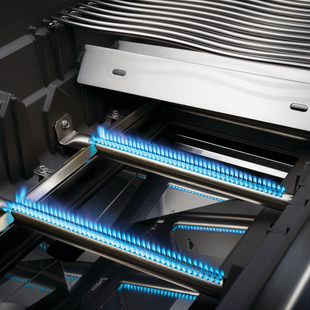
  3. If you have an adjustable air shutter on the end of the venturi tube, it should be in an open position… approximately 3/8". If this shutter is closed, the flame pressure at the burner head will be reduced, causing a lazy yellow flame lacking in proper heat value. Some yellow flame is considered normal in a barbecue, due to normal impurities in the propane and grease build-up. When yellow flame becomes dominant, check and clean the burners and venturi tubes.
  4. Check the valves for smooth operation and replace if necessary. Push in before you turn them. Remove the orifices, located in the ends of the valves, and check the openings, if clogged, clean them. Before replacing the orifices, run a little gas through the valve to blow out any particles that may be inside.
  5. Scrape & remove all built up residue in the firebox. Be sure combustion holes in bottom of casting are kept clear.
  6. Re-install the burner, making sure the orifices on the valves are correctly seated inside the ends of the venturi tubes. Light the burner and observe the flame pattern. If pattern is uneven, replace the burner.
  7. Lava Rock should be replaced about every two years. Lava rock is very reasonably priced, but new products like ceramic VENTILATED bricks and ceramic briquets can provide more even radiant heat with greatly reduced flare-ups, for better grilling results. Unlike lava rock that absorbs fats and transfers old food flavors, these products maximize heat so juices vaporize more readily. Sugars from sauces tend to crystallize on any of these surfaces. When excess build-up occurs on the surfaces, turn over and allow the burner flame to bum it off. Never double layer any product that you may use in your barbecue. Solid bricks or double layering traps the heat required for proper grilling, and can also cause warp damage.
  8. After performing all of the above, and if the barbecue does not heat adequately, replace the hose and regulator assembly.

SAFETY CHECK

A safety item that should be checked regularly on older style propane tanks with left hand threads, is the 0 ring.

  • It is located on the end of the tailpiece extending out of the regulator, and which threads into the tank. This 0 ring can become flattened or cracked, and cause a dangerous leak.
  • The new style QCC1 tanks can create problems when overfilled or when exposed to direct sunlight, which creates excessive pressure.
  • If you experience trouble with lighting or maintaining normal heat values, shut the tank down and wait a few minutes. Re-open the tank valve slowly. Follow the same procedure if you have a humming noise coming from the regulator, which is caused by excess pressure.

All parts like handles, valves, temperature gauges, grills, warming racks, rock grates, broken windows and cracked or leaking hoses should be replaced as required.

IGNITORS

Ignitors take a real beating inside a barbecue. Out of necessity, these miniature "spark plugs" must be located on or at the burner, thus placing them in the fire when the barbecue is in operation.

  • The grounding surface of the burner becomes coated with grease and residue, and the porcelain insulator on the electrode can crack from the heat. When this occurs, the spark being transferred through the insulator will "bleed" from the crack, and place it in a position where ignition will occur only after a build-up of gas or not at all.
  • For this reason, ignitors should be replaced when this occurs, and burner surfaces cleaned up in the ignitor area. Burner portholes in this area should be kept clean and open.
  • ALWAYS KEEP LID OPEN WHEN LIGHTING A BARBECUE. The spark gap between electrode and burner is about 3/16".

BBQ Parts


ARE YOU LOOKING TO REPLACE THE PARTS IN YOUR BARBECUE?

Let us know which part and the model number of your barbecue and we will do our best to find it for you. If we do not carry the part and it is still being made we are often able to refer you to who does.

All orders must be prepaid by either credit card or pre-authorized check. If paying by credit card we do ask that you fax us a copy of the card along with your drivers license. All orders will not be shipped until they have been paid in full.

Shipping charges are the customer’s responsibility. For a quote email us your address (including postal code) and we will determine the shipping costs. If the order exceeds $200.00 then we do ask that you stop by one of our showrooms to pay for your order.

Please contact us if you have any questions or are in need of a retailer in your area.

What Kind of Brush Can I Use to Clean My Barbecue?


You can use any brush with brass or stainless steel bristles.
Both of those metals are soft enough that they will not scratch the porcelain or stainless steel finish on your cooking grills.  Any brush you find in our stores is safe to use.  Please avoid using the ‘paint scraper’ type brush with raw steel bristles.  Raw steel is hard enough to cause damage to your grills.  Also avoid using the steel ‘scraper’ at the end of many cleaning brushes on your cooking grills.  The scraper is designed for cleaning the gunk off of the inside hood of your barbecue.